St Anthony Church Fire and Rebuilding in Casa Grande
Our Sacred Journey
A Heritage of Faith in Casa Grande

For generations, St. Anthony of Padua has been the spiritual heart of Casa Grande—long before our current church was built.
The Catholic faith in this community began with traveling priests who journeyed across the desert to celebrate Mass for small groups of families. In those early years, there were no permanent buildings—only a deep desire for the sacraments and a growing community of believers.
By the early 1930s, that faith took root in a more permanent way with the establishment of St. Anthony Parish. A small chapel was built, and over time, as Casa Grande grew, so did the parish. Families came together—sacrificing, giving, and working—to create a place where their children could be baptized, confirmed, married, and formed in the faith.
In 1960, the church many of us knew was built—a sign of a thriving and faithful community. For decades, it stood as a place of prayer, celebration, and belonging.
Through baptisms, weddings, and daily Mass, the story of St. Anthony’s has always been more than a building—it is the story of the people who built it, sustained it, and called it home.

Missionaries in the Desert
Before a permanent church stood in Casa Grande, the Catholic faith was carried here by traveling missionary priests.
Journeying across the Arizona desert—often on horseback—these priests brought the sacraments to scattered families, celebrating Mass in homes, ranches, and humble gathering places. In those early years, the faithful could gather for Mass only occasionally—sometimes just once a month—but their desire for the Eucharist never diminished.
In 1906, Ramon and Emilia Cruz donated land at First Street and Rancho Grande, making possible the first Catholic presence in the area. What began as a small chapel soon became a place of hope for a growing community.
As more families settled in Casa Grande, that small beginning grew. In 1930, Father Patrick J. Murphy built a rectory on the site, laying the foundation for what would become St. Anthony of Padua Parish.
Through hardship, distance, and sacrifice, a faithful community took root—one defined not by buildings, but by devotion. That foundation of faith would one day grow into the parish we now call home.
Building the First Church
1935 - A New Chapter Begins
By 1935, the growing Catholic community in Casa Grande had outgrown makeshift gatherings and small chapels. With faith and determination, the parish completed its first permanent church building—a modest adobe structure facing First Street at Picacho.
It wasn’t just a building. It was a sign that the Church had taken root.
Led by Father Patrick J. Murphy, the parish’s first resident pastor, this effort came during the hardships of the Great Depression. Families who had very little still gave what they could—time, labor, and

resources —to create a place where the sacraments could be celebrated and the community could gather in faith.
What they built was simple, but it was theirs.
That small mission-style church became the center of Catholic life in Casa Grande—where generations would come to pray, to celebrate, and to belong.
In time, the original church would become known as Murphy Hall, honoring the priest and the people who helped establish the foundation of St. Anthony Parish.

But what grew here was more than a building.
In the decades that followed, St. Anthony became a center of faith and community life in Casa Grande. Families filled the pews. Children were baptized and educated in the faith. Parish ministries expanded, welcoming new generations and strengthening the life of the Church.
St. Anthony of Padua Catholic School served generations of students, while parishioners worked together to build not just a parish—but a community rooted in faith.
In the early 1990s, the parish launched “Catch the Spirit,” a pastoral initiative focused on evangelization, ministry growth, and preparing for the future of the Church.
Through baptisms, weddings, funerals, and daily prayer, generations of parishioners built a legacy that continues to shape St. Anthony Parish today.
A Growing Parish Community
1960s–1990s
As Casa Grande grew, so did St. Anthony Parish.
By the early 1960s, the original adobe church built in 1935 could no longer hold the growing Catholic community. In response, a new and larger church was built in 1960—creating the space many parishioners remember as home. The original building became known as Murphy Hall, a reminder of the parish’s earliest foundation.
For nearly a century, that faith endured.
But on October 18, 2024… everything changed.
In a matter of hours, a century of history was reduced to ashes.
The Day of the Fire
October 18, 2024
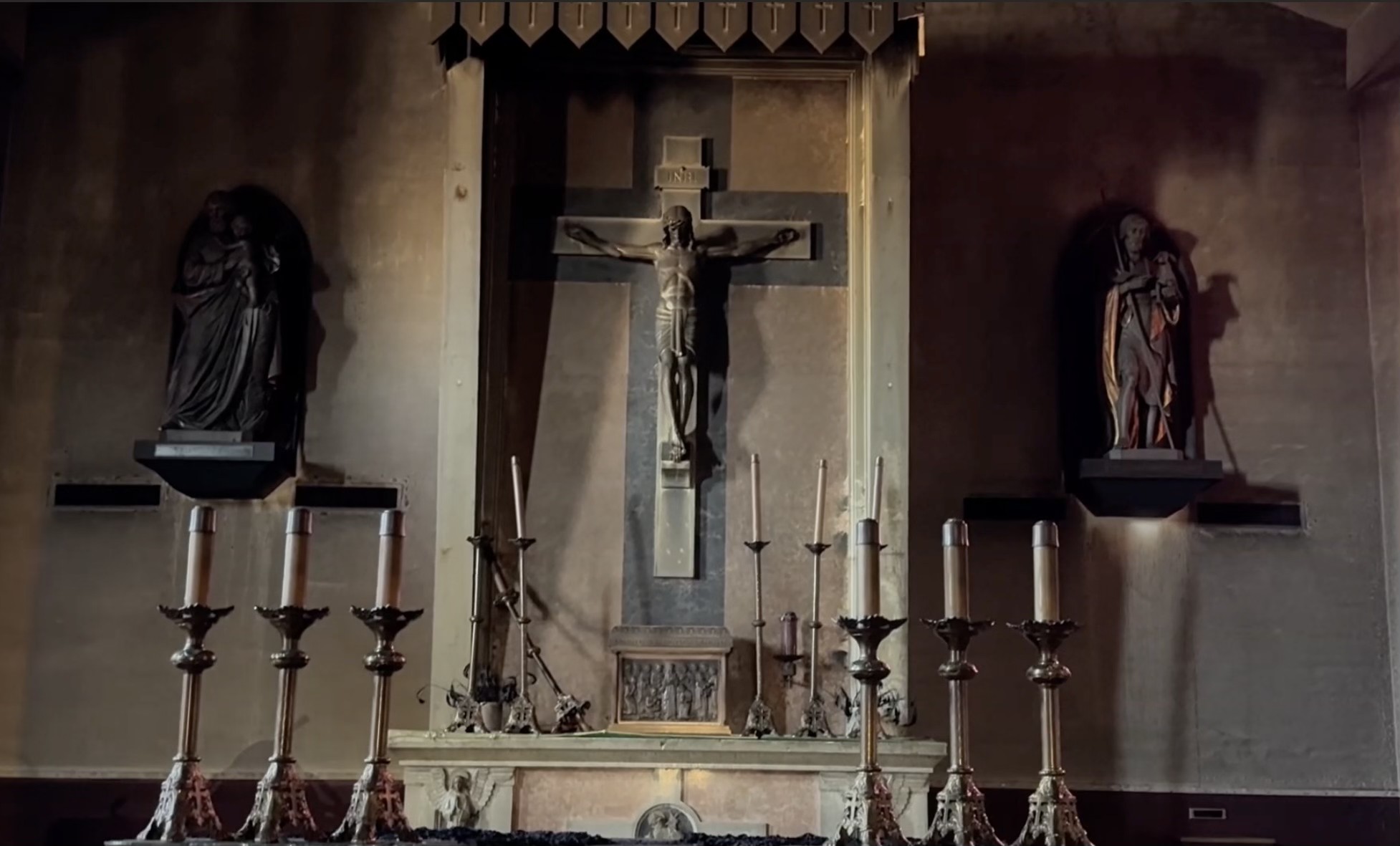
On the evening of October 18, 2024, tragedy struck the St. Anthony of Padua parish community when an act of arson set fire to the church that had served generations of worshippers in Casa Grande. Flames and smoke quickly spread through the sanctuary, leaving the interior beyond repair.
In a matter of hours, a sacred space built over decades was lost.
Yet what could not be destroyed was the faith of the people.
Within days, parishioners gathered again for Mass in temporary spaces—united in prayer, resilience, and unwavering hope. What was taken in fire only revealed more clearly the strength of this community.
For nearly a century, the people of St. Anthony have built a parish rooted in faith, sacrifice, and service. That same spirit now carries us forward.
We are not just rebuilding a church.
We are restoring a home.

“The Church is not made of stone and wood, but of the living faith of its people.”


.jpg)


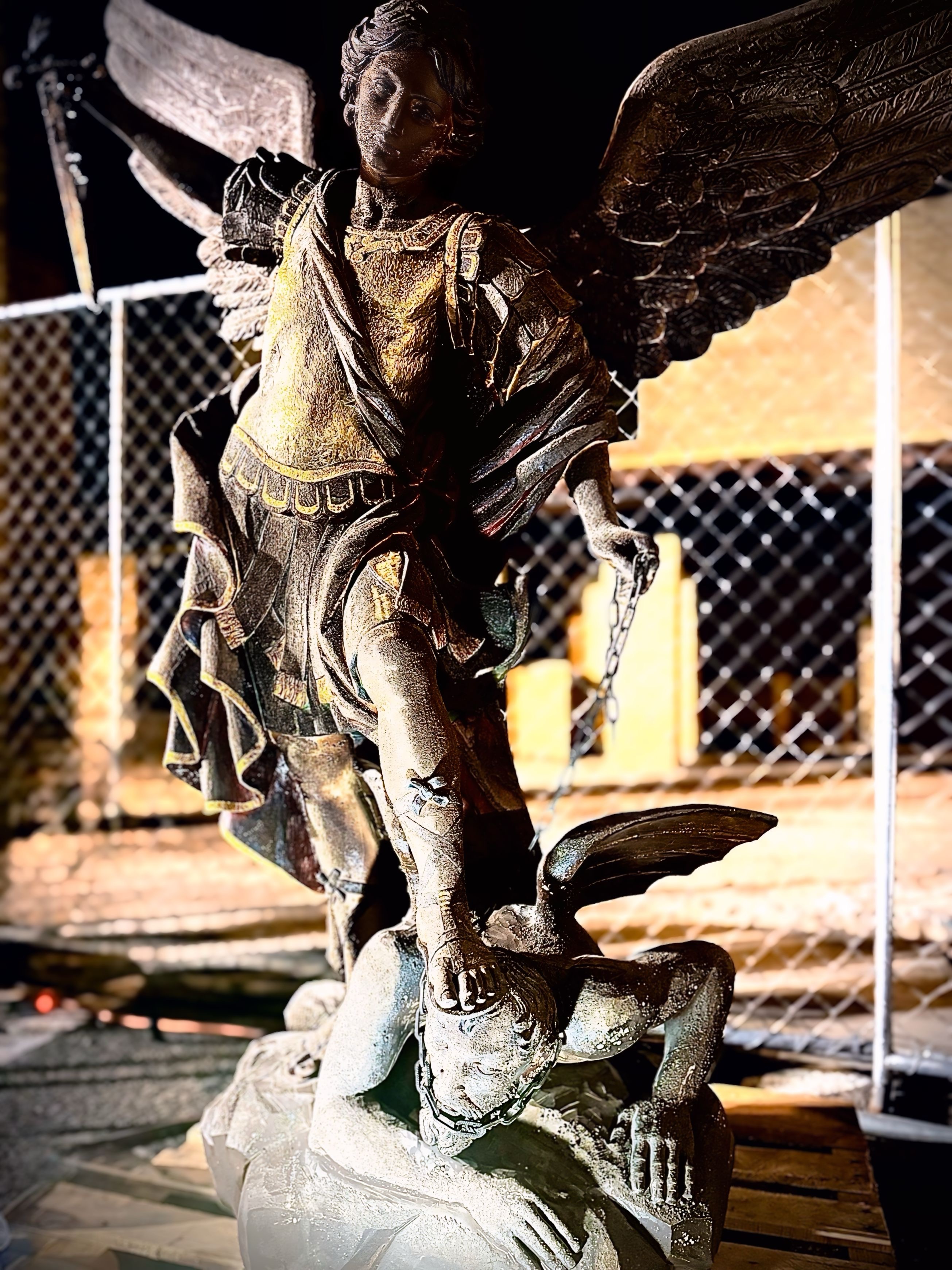
Even in destruction, pieces of our faith endured.
A New Chapter for St. Anthony
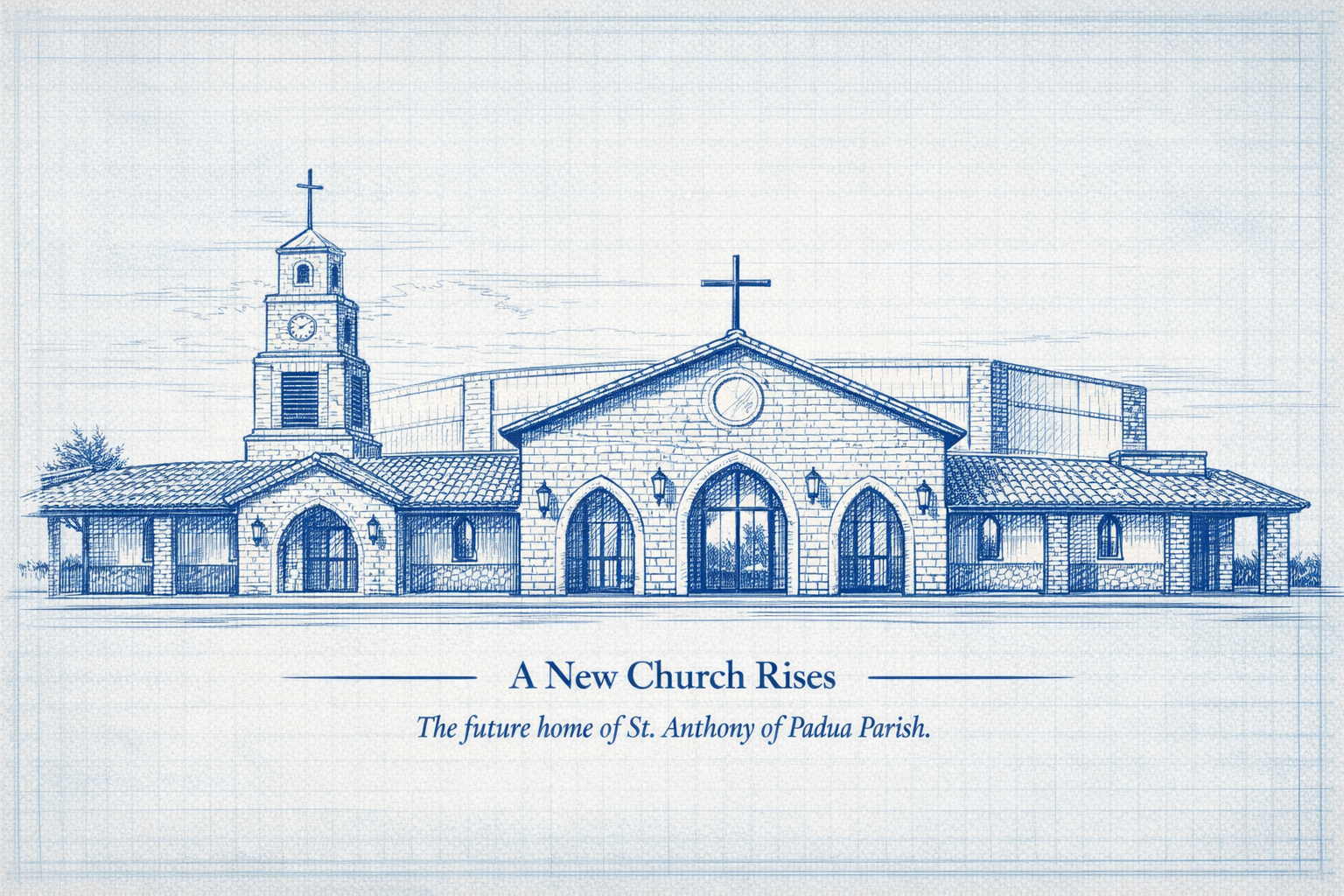
Today the parish community of St. Anthony of Padua looks forward with hope and determination. Just as earlier generations sacrificed to build this church in the Arizona desert, today’s parish family is united in rebuilding a new sacred home for worship in Casa Grande. Rooted in faith and guided by the legacy of those who came before,
the story of St. Anthony continues as a new chapter begins.


A Future Forged in Faith
The vision for our new parish is one of strength, light, and enduring devotion. As we look to the future, we are not simply rebuilding what was lost—we are creating a sacred space that elevates our community’s spiritual life. Together, we are building a legacy for generations to come—a place where faith is not only remembered, but lived.
